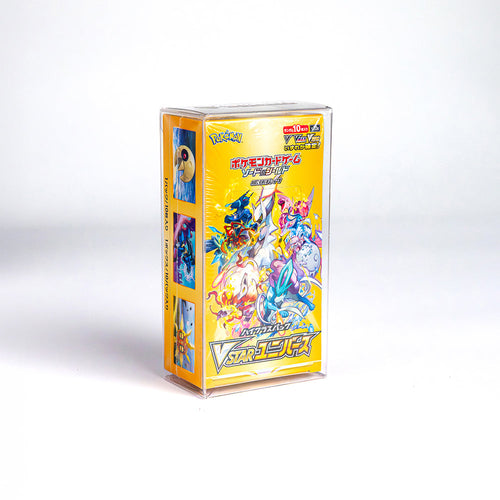
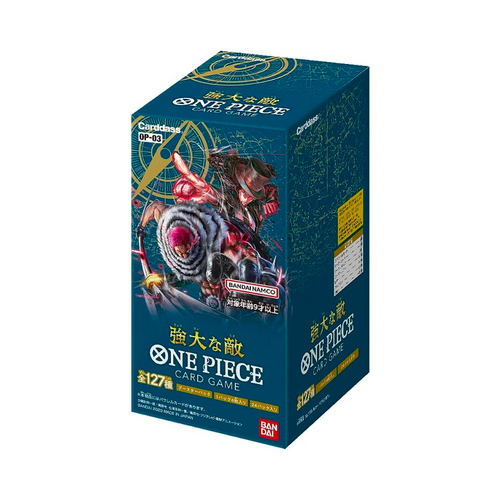
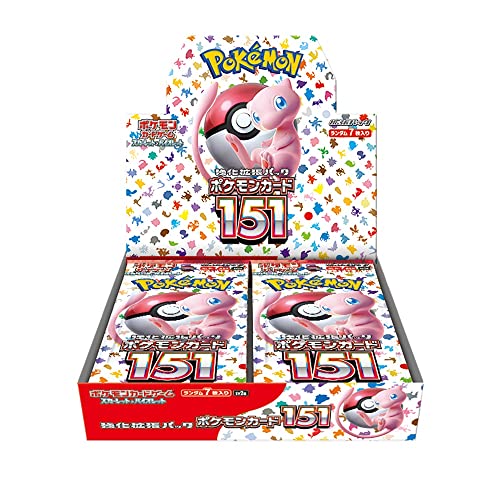
If you're new to sealed Pokémon TCG — or you've only ever bought English product because that's what was on the shelf at your local game store — the question "Japanese or English?" can feel surprisingly loaded. The honest answer is: it depends on what you're trying to do. Below is the breakdown we walk new customers through every week at Pikamon.
The fundamental differences
| Japanese | English | |
|---|---|---|
| Packs per box | 10 or 30 (set-dependent) | 36 |
| Cards per pack | 5–11 | 10 |
| Set release | First (Japan leads) | ~3–6 months later |
| Pull rates (modern) | Generally higher | Lower |
| Print quality | Slightly thicker stock, sharper foils | Thinner, holo finish varies |
| Tournament legal in EU | No | Yes |
Buy Japanese if you're a collector
Japanese product holds value better for three reasons. First, print runs are smaller per set, especially for the high-class sets like VSTAR Universe or Mega Dream ex. Second, the artwork is often the original — every alt art chase card and SAR was designed for the Japanese release first; English prints are translations. Third, Japanese sealed product is the input feedstock for the entire global secondary market — graders prefer Japanese, investors prefer Japanese, and serious resealed graders quietly hoard it.
The trade-off is that Japanese is for collecting and opening, not for tournament play in the EU. If you want to actually play with the cards you pull, you'll either need to keep them as collectibles or use them in casual/JP-format events.
Buy English if you want to play — or you're after specific Western exclusives
If you want a deck you can take to a Pokémon League night in Berlin, Amsterdam or Paris, you need English cards. Standard format only allows the most recent English-language sets. English is also where you get Pokémon Center exclusives (Surging Sparks Pokémon Center ETB, Black Bolt and White Flare ETBs), Ultra Premium Collections (Pokémon Box Sets), Costco / Sam's Club bundles, and most of the rare Special Collections.
What about Korean and Chinese?
Both are gaining traction with collectors. Korean printings have a reputation for slightly better print quality than English and are typically priced between Japanese and English. Simplified Chinese has its own collector following — the Chinese regional gift boxes (Mid-Autumn, Eevee GX gift boxes) are unique and increasingly hard to source outside Asia.
Our take
For most EU collectors, the sweet spot is 1 Japanese high-class box per major set + 1 English ETB per major set. You get the strongest collector hold (Japanese) plus the most-shareable, playable format (English). Stick a Heimdall® PET Protector on the Japanese one before it touches your shelf and you'll thank yourself five years from now when grading reaches the inner foil cards.
Still not sure which set to start with? Drop us a message — we'll point you to what's actually moving and what we'd buy ourselves.