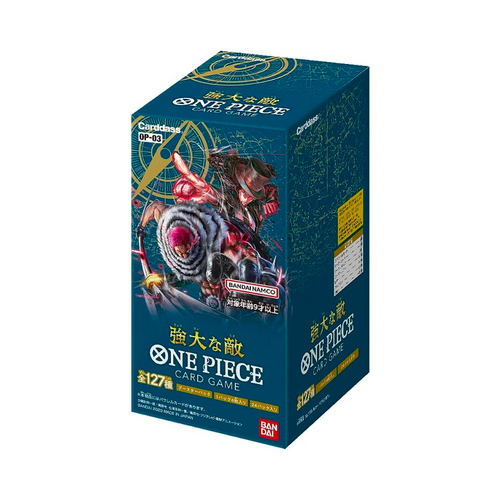
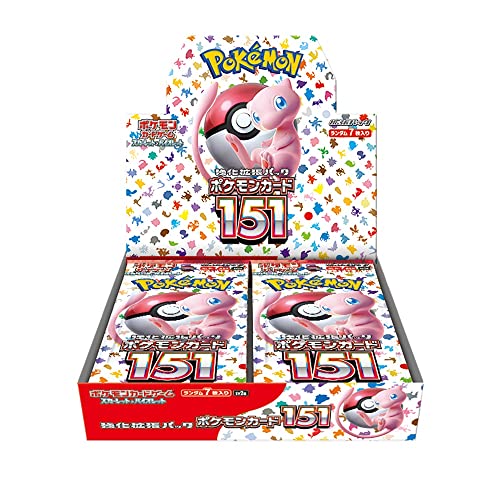
The sealed Pokémon market has exploded in the past five years, and so has the counterfeit trade. Fake booster boxes are no longer obvious knock offs with blurry artwork. In 2026 the best counterfeits get scary close to the real thing. If you're buying sealed Pokémon TCG to hold long term, you have to know what to look for.
This is the same checklist we run internally at Pikamon when product lands in our Rumpt warehouse, before anything is ever listed for sale.
1. Source matters more than the product itself
The single biggest signal is where the product came from. Pikamon sources direct from authorised Japanese distributors and Pokémon Company channels. We do not buy from anonymous bulk sellers on AliExpress, eBay or random Telegram groups, ever. If your shop can't tell you their supplier chain in a sentence, walk away.
2. Check the outer shrink wrap
Real Pokémon factory shrink has three tells:
- Seam direction. Factory shrink runs along a consistent seam (bottom or back depending on set). Fake shrink often has the seam in the wrong place.
- Tightness. Factory shrink is tight to the box with no air pockets. Fake re-shrinks frequently leave bubbles or loose corners.
- Sticker placement. The authenticity or barcode sticker should sit perfectly flat. Re-shrinks often have the sticker slightly off-axis, or creased under the wrap.
3. Weight check (yes, really)
This is the gold standard. Every legitimate sealed Pokémon product has a consistent factory weight, accurate to a few grams. We weigh suspicious product on a 0.1g scale. Counterfeit booster boxes are often 15 to 40 grams lighter than a real box, because the inner packs are weighted differently, sometimes with re-packaged junk packs, sometimes with no foils included at all.
If you ever receive a Japanese booster box and the weight feels noticeably off from a known-good box of the same set, weigh it. Compare against community-tracked reference weights (PokeBeach and several JP Discord servers keep updated lists).
4. The inner pack pattern
If a box has been resealed, the inner packs almost always show signs. Factory-packed Japanese high-class boxes have a specific stacking pattern, packs alternate orientation in tight rows. A resealed box often has packs slightly out of alignment, or one or two packs flipped the wrong way.
For English 36-pack boxes, every booster pack has a unique foil placement pattern on the back. Real boxes have foil cards distributed throughout per Pokémon Company specifications. A pre-searched ("weighed") box will often have all the heavy packs missing.
5. Print and packaging details
For close inspection, compare the box against a known-good example of the same set:
- Foil sharpness on the logo. Fakes are often slightly muted or pixelated.
- Holographic anti-counterfeit stickers. Real Japanese boxes have specific holographic patterns that rotate predictably as you tilt the box.
- Colour saturation. Some fakes run slightly over-saturated or carry a magenta tint, but treat this one carefully. Print batches vary naturally, and a box that's spent time in direct sunlight can genuinely bleach or shift colour on its own. Use saturation as a supporting clue, never the only one.
- Cardboard texture and "spiderwebbing." Real Japanese boxes have a slight texture to the cardboard. On the smooth side of the box specifically, hold it under direct sunlight at an angle and look for extremely faint, thin hairline marks in the coating, almost like a spiderweb. It only shows up under strong direct light, but it's a genuine tell on authentic Japanese print stock that's very hard for counterfeiters to replicate.
- Kanji and furigana accuracy. Counterfeit printing plates are frequently built by copying reference photos rather than the original print files, and small character-level mistakes slip through: a katakana character swapped for a similar-looking kanji, a furigana reading that doesn't match the kanji above it, or spacing that's just slightly off from a genuine box. If you can read Japanese, or have someone check for you, the fine print on the box (set name, product description, publisher credits) is worth a close look.
6. Barcode and batch code mismatches
Every legitimate box carries a barcode and a batch or lot code that should match the product it's printed on. Common counterfeit tells: a barcode that scans to the wrong product or set entirely, a barcode with visibly different print quality (font weight, spacing, sharpness) than the rest of the box, or a batch code format that doesn't match what's been reported for that set elsewhere. If something scans oddly or looks reprinted compared to reference photos of a verified box, treat it as a red flag worth investigating further, not proof on its own.
7. The "Steam Siege" giveaway
One of the most reliable, and honestly funniest, tells we've seen on fake English booster boxes: some counterfeit runs are built from recycled printing plates or moulds from older sets, and the small print on the bottom of the box still references Steam Siege, an XY-era set from 2016, regardless of what set the box is actually supposed to be. If you flip a box over and see Steam Siege printed anywhere on a set that isn't Steam Siege, that box is fake, full stop.
What Pikamon does that you can't easily do yourself
We hold inventory at our Netherlands warehouse, source from authorised channels only, and inspect every single sealed box that lands. For high-class Japanese sets we cross-reference batch codes against distributor records. This is why we don't compete on the cheapest price on Marktplaats. We compete on the fact that every sealed item we sell is what it says it is.
Once you've verified, protect it
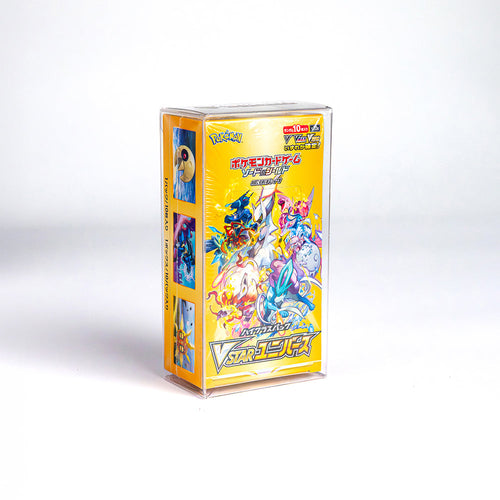
If you've gone through this much trouble to verify a sealed box is genuine, the next thing you do is not stack it on a shelf next to other boxes where the shrink can scuff and the corners can dent. Sealed product in mint condition with intact shrink commands a significant premium over product with shelf damage. A Heimdall® PET Protector costs a fraction of what the box itself is worth, and it's the difference between a box you can sell as "mint sealed" in five years and one you'll need to discount.
Questions about authenticity of something you've already bought? Send us a photo, we'll give you an honest second opinion.